
























































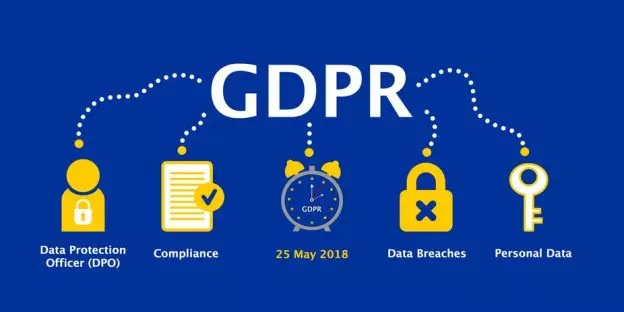
In 1977, Bob Marley told us not to worry and that every little thing is going to be alright. How prophetic his words would apparently prove, in many areas, although I’m not sure he necessarily meant it in the context of the 2018 General Data Protection Regulations!
Far from being the end of the world as we know it, the EU’s impending GDPR legislation is actually a good thing – even if we may not all understand exactly how yet!
Unfortunately, people have been giving away their personal data for a lot of years with very little understanding of why anyone would want their data, or what this data might eventually end up being used for. People generally understand that their data is being collected, but do not know why, which begs the question ‘can anyone actually give consent?’
The fact of the matter is that these reasons are laid out in a lengthy terms and conditions document that you ticked the box to say you had read and understood. You did read that document, understand it and provide your consent, right? No, of course, you didn’t. The marketing guys that put these boxes on these forms know that you haven’t looked at it too. That’s why they stash all kinds of legal mumbo jumbo in there, and that’s not the way business should be done.
As it turns out, research shows that most consumers have no problem with their data being held by companies – as long as they know what is being done with it and they can make it stop whenever they want.
Ultimately, that’s the goal of the GDPR legislation. And it is a goal to be applauded as it allows individuals to maintain their privacy from private companies and should ensure that your data is only used in ways that work for you – not for the companies as a saleable commodity.
Although constructed by bureaucrats in Brussels with plenty of ambiguity and a pinch of overreach baked right into its 120+ pages, the hefty GDPR legislation will help brands and email marketers do their jobs better in the end.
It is unfortunate that the ambiguity of the rhetoric used in the GDPR has created such widespread panic and paranoia in the email marketing realm. The legislation that comes into force on May 25th is not focussed on email marketing directly at all. Far from it, in fact.
The GDPR addresses philosophical concerns about data privacy. The most important area of the legislation is the requirement for “legitimate interests” to process personal data – meaning that the data a company uses must be collected and processed in the interests of the person whose data they’re processing, or for legitimate (and non-dodgy) business reasons.
A company storing their customers’ names, purchase information and even address constitutes a legitimate interest, as this data could be required for tax, warranty or insurance purposes. It could also be a legal requirement.
However, can a health App store your personal health data? Or can an ancestry service hold data about your DNA? Absolutely not.
This is where General Data Protection Regulations will spring into life. By sorting the information they hold into legitimate reasons and illegitimate reasons – legal and illegal, if you will – marketers cannot simply store whatever the hell they feel like because you ticked a box and gave “consent”.
This is why fears of a GDPR-related witch hunt are, fortunately, unfounded. Obtaining consent will simply require a bit more work and will force us to be creative again! Marketers are often a lazy bunch! (All Marketers, except us, that is obviously!)
This approach to a positive opt-in is, therefore, excellent news for us marketers. Whilst it does require us to do some work to obtain the opt-in, what’s left is a highly engaged audience. Positive opt-in has been best practice in email marketing for many years, long before the GDPR was even a thought in a Brussels courtroom. Why the hell would you want to trick people into subscribing to your mailing list? Or to purchase a list of names?
What possible benefit does sending an email to someone who doesn’t want it hold? The only reason to do this would be to simply have a stab in the dark, and this is just silly. As marketers, it is our job to persuade people to want to hear from us using excellent content, engaging imagery and relevant offers – to offer our subscribers something of value. GDPR simply refocusses our sights on this goal and I, for one, think the legislation is a great thing.
As marketers, we do not need to reinvent the wheel to exist as a successful email marketer in the upcoming post-GDPR world, we simply need to do our jobs. And so I direct your attention back to Bob Marley – he had it right the whole time:
“Don’t worry about a thing
‘Cause every little thing gonna be alright
Singing’ don’t worry about a thing
‘Cause every little thing gonna be alright”